General information, not legal or environmental advice. Waste rules are made by each state’s environment protection authority; this sheet describes NSW, from the NSW EPA’s construction and demolition pages. Check your own state’s EPA.
Note 1 · What comes out
More than rubble
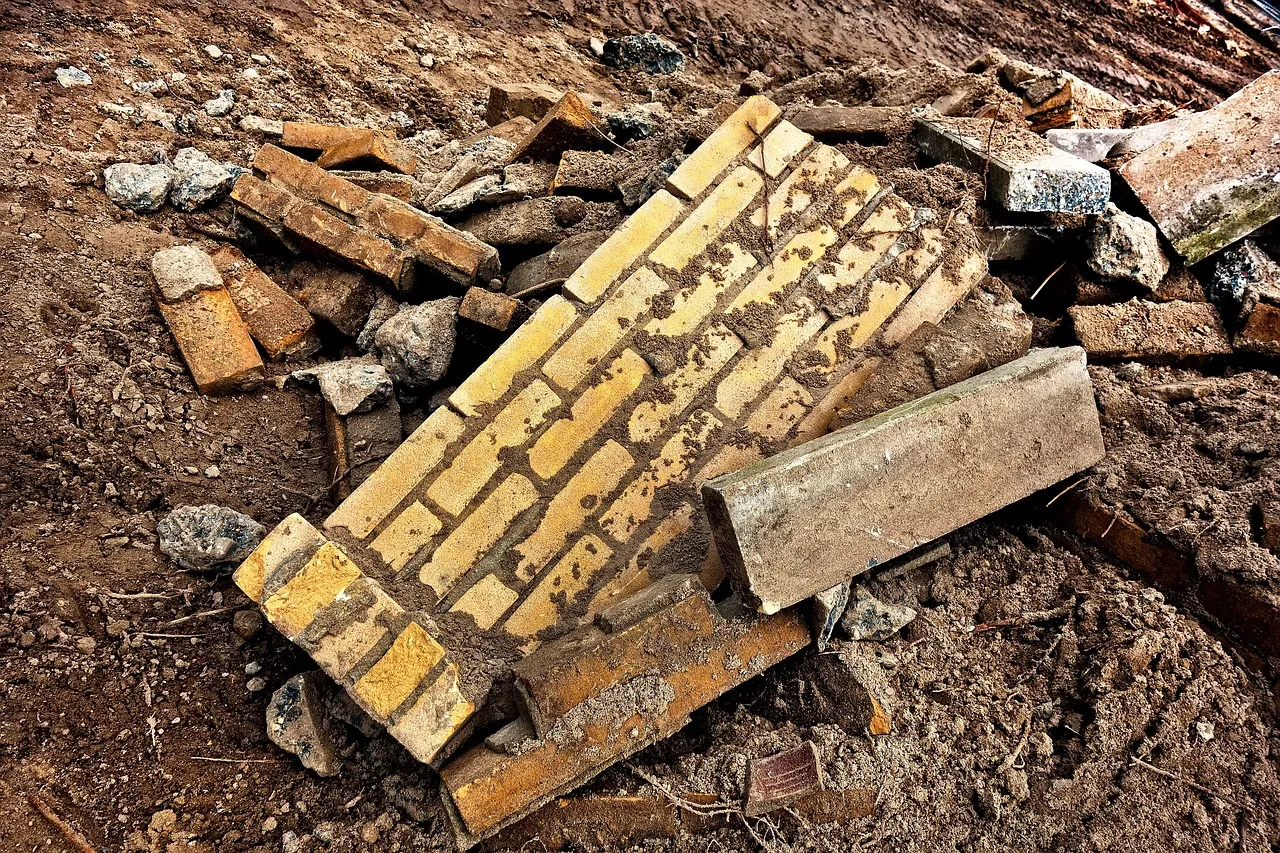
The NSW EPA says construction and demolition waste is not just rubbish and unwanted material. It includes excavated material such as rock and soil, and waste asphalt, bricks, concrete, plasterboard, timber and vegetation.
The NSW waste hierarchy puts the choices in order of preference: avoid and reduce, reuse, recycle, recover energy, treat, and only then dispose. Reuse without further processing comes before recycling because it avoids the energy and resources that recycling takes.
- Bricks or concrete
- Asphalt
- Ferrous (iron or steel)
- Aluminium and other non-ferrous metals
- Wood, trees or timber
- Plasterboard
- Glass
- Soil, and virgin excavated natural material
Note 2 · At the facility
What happens to a load at a NSW construction waste facility
The EPA’s Standards for Managing Construction Waste in NSW started on 15 May 2019. They aim to have facilities minimise the risk asbestos poses to people and the environment, and to improve confidence in the quality of recycled products.
- Inspected on arrivalEvery load is inspected by trained staff, from an elevated platform or by camera, for asbestos or other waste the facility may not accept.
- Tipped, spread and turnedEach load is tipped on a dedicated hardstand, spread, and turned so the whole load can be inspected, unless it meets a resource recovery order and comes with a valid statement of compliance.
- Rejected whole, if asbestos is foundIf trained staff find or reasonably suspect any asbestos, the entire load is rejected and reloaded, and the vehicle carrying it must leave the facility within one day.
- SortedA clean load is sorted into the listed waste types, or into waste that meets a resource recovery order, and only inspected and sorted waste may leave the facility, other than rejected loads.
A load with any asbestos in it, found or reasonably suspected, is rejected whole. That is one more reason the asbestos work on sheet 03 comes before the demolition.
Asbestos has its own way out. The Asbestos and Silica Safety and Eradication Agency says it is “not recommended that you handle or remove asbestos yourself”, and in New South Wales the law sets limits: a home owner may legally take out non-friable material covering less than 10 square metres themselves, but must take the same strict safety precautions as professional removalists, and any friable material, or more than 10 square metres, needs a licensed removalist. The national agency adds that asbestos waste can only go to a landfill licensed to accept it. It also says that even if you follow every safety step, hiring a licensed asbestos removalist who is trained, insured and equipped for the work is much safer and easier. NSW’s planning department says there is “no safe level of exposure to asbestos”, and that you must not do anything that can release asbestos fibres into the air from material that may contain it, including cutting, drilling, sanding, scraping, scrubbing and water-blasting. In NSW it also cannot go into demolition waste skip bins or kerbside bins.
Note 3 · Back into use
How recovered material is used again in NSW
Some wastes can be reused under a resource recovery order and exemption, a pair of documents the EPA issues together. The order sets how the waste is made and processed; the exemption sets the conditions for whoever uses it. They apply only where the reuse is genuine rather than a way of disposing of waste, and will not harm health or the environment.
Among the current orders
- Recovered aggregate
- Reclaimed asphalt pavement
- Plasterboard
- Excavated natural material
- Excavated public road material
Conditions that come with them
All conditions of the order and exemption must be met for the supply and reuse to be lawful, the user needs permission from the owner and occupier of the place where the material goes, and records must be kept for six years.
Note 4 · The owner’s duty
Whoever owns the waste answers for where it goes
Under section 143 of the Protection of the Environment Operations Act 1997, waste may only be taken to a place that can lawfully accept it. The burden of proving that it went to such a place falls on the waste’s owner and the transporter alike, and relying on advice from consultants, contractors or facility managers is no defence.
The EPA’s checklist for owners and project managers:
- Know what types of waste the demolition and excavation will produce.
- Ask why if a quote for managing the waste is low: the company may be cutting its costs by taking the waste somewhere unlawful.
- Check the facility’s council development consent and environment protection licence, and give it details of the waste.
- Prepare and follow a waste management plan that lists each type of waste and what will happen to it, and who is responsible.
- Keep records: who carried the waste, with vehicle and driver details and times, and the dockets or receipts from the facility.
Under a NSW complying development certificate for demolition, a waste management plan goes to the principal certifying authority at least 2 days before work begins, and the site must be clear of waste and debris at the end. On site, the model code says debris should be removed progressively, so it does not overload a suspended floor, block the way in and out, or become a fire hazard.
The EPA states that the maximum penalty for illegal dumping that harms the environment is $5 million or seven years’ jail.
This is the last sheet in the set. Back to the sequence.